EV Charger Inductor: Addressing High-Frequency Challenges, Unlocking New Low-Loss Solutions
Publish Time: 2026-03-17
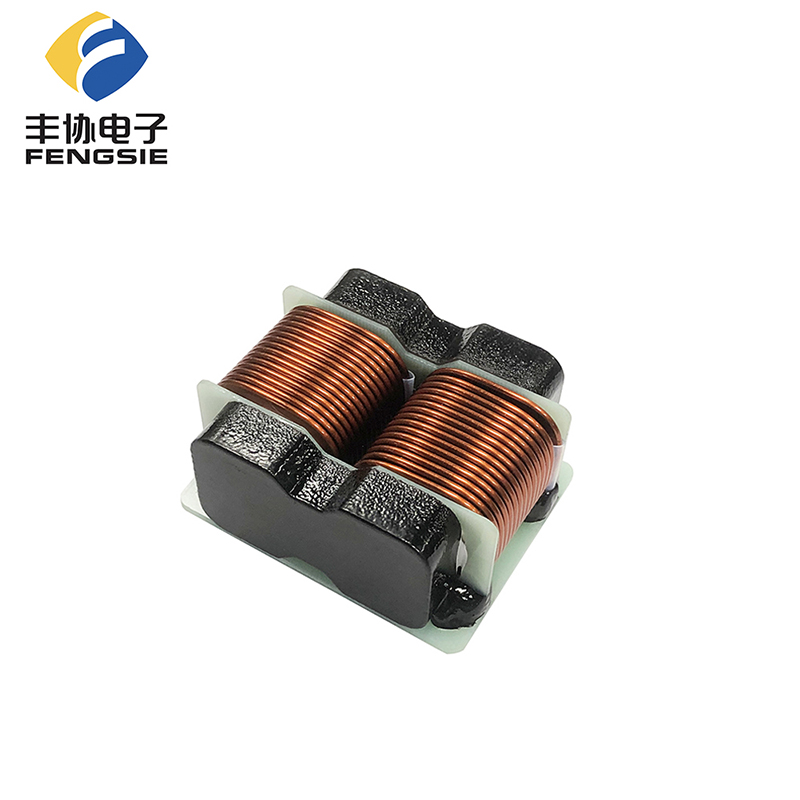
With the explosive growth of the electric vehicle (EV) industry, charging infrastructure is rapidly evolving towards high power and fast charging. EV charger inductors aim to reduce size and increase power density.1. A Revolution in Copper Loss at High Frequency: From Round Wire to Flat WireTraditional round wire windings are significantly affected by the "skin effect" and "proximity effect" under high-frequency currents, leading to a reduction in effective conductive area and a sharp increase in AC resistance. To address this challenge, High-Frequency Litz Wire EV was once the mainstream, but its low fill factor became increasingly apparent in ultra-high current scenarios. Now, Flat Wire Coil EV Charging technology is becoming the mainstream choice. Employing Edgewise Coil Charging Pile technology not only significantly improves the window fill factor but also significantly reduces DC and AC resistance. This core component of the Copper Coil EV station, by optimizing the conductor cross-sectional shape, perfectly adapts to the demands of high-frequency, high-current applications, minimizing copper losses. In booster inductor charging applications, flat wire technology has achieved a breakthrough, reducing volume by 30% while increasing efficiency by over 1%.

2. Core and Topology Innovation: The Ultimate Pursuit of Air Cores and ResonanceBesides winding optimization, the choice of core material is equally crucial. In the ultra-high frequency band, traditional ferrite losses are difficult to ignore, leading to the development of the Air Core Coil EV charger solution. While the air core design avoids core losses, it places higher demands on its winding structure and heat dissipation. Meanwhile, the Self-resonant Coil Charging Station utilizes parasitic capacitance and inductance to create resonance, reducing external compensation components and further improving system efficiency. In the field of wireless charging, the designs of Wireless Charging Coil EV and Inductive Power Transfer Coil are more complex. The Toroidal Coil Wireless EV, due to its low leakage flux and high coupling efficiency, has become the preferred choice for static wireless charging. These designs collectively constitute the physical basis for efficient energy transfer.3. Collaborative Evolution of the Energy Storage Industry: Common Technologies for High Power DensityInnovations in inductor technology extend beyond charging stations, deeply collaborating with the energy storage industry. Flat wire coil energy storage and high-current flat wire energy storage are widely used in superconducting magnetic energy storage (SMES) and high-power converters. Superconducting coil SMES utilizes zero-resistance characteristics for lossless storage, while in conventional high-power systems, high-power choke coil storage relies on edgewise winding storage technology to handle pulsating currents. Whether it's a magnetic energy storage inductor or a multilayer coil energy system, the core logic is consistent with that of charging stations: reducing losses through copper flat wire energy coils and improving the response speed and efficiency of inductor coil power storage. Research on toroidal superconducting coils has also pointed the way for future ultra-high-density energy storage.From EV charger inductors to deep integration with energy storage technologies, low-loss solutions are unlocking new potential for green energy transmission. This is not only a technological iteration, but also a crucial step towards an efficient, low-carbon future.