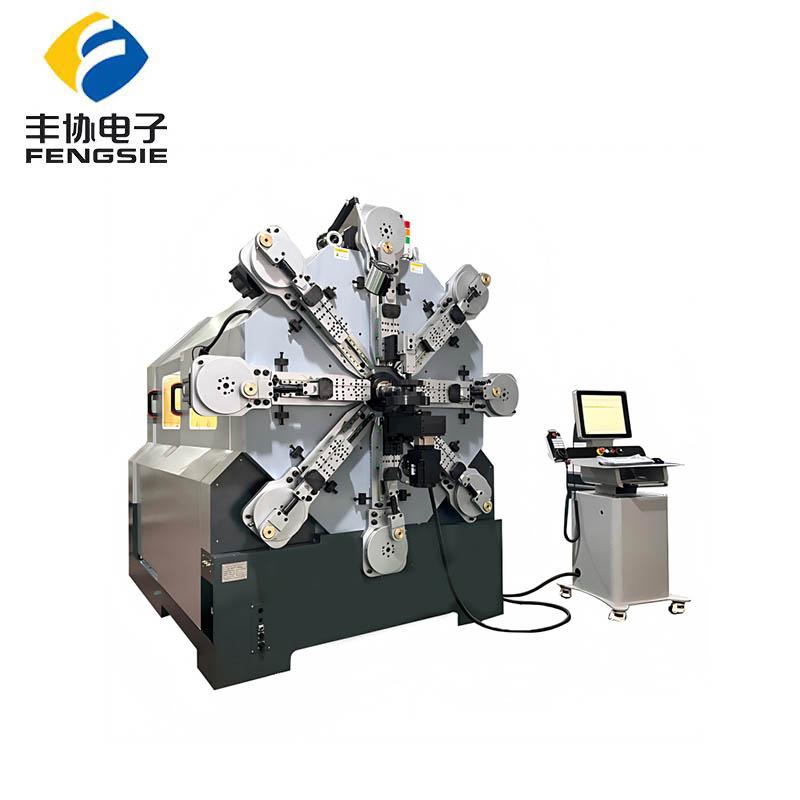
What is the unique structure of the EV insulated busbar bending machine in preventing insulation damage and springback?
Publish Time: 2026-02-24
In the high-voltage electrical system of electric vehicles, the insulated busbar is a core conductive component connecting the battery pack, motor, and electronic control unit. Its processing quality directly determines the safety and reliability of the entire vehicle. Because the insulated busbar is composed of a composite of a metal conductor and a polymer insulation layer, its special material and fragile structure make it highly susceptible to insulation cracking, indentation, or material springback using traditional bending equipment, affecting electrical performance and service life. The EV insulated busbar bending machine was developed to address this issue. With its unique structural design, it demonstrates superior performance in preventing insulation damage and springback, becoming a key piece of equipment in the intelligent manufacturing of new energy vehicles.Specifically Designed for Insulated Busbars: Collaborative Protection Through Structure and MoldsThe core advantage of the insulated busbar bending machine lies in its specialized design. The overall structure of the equipment and the mold system are optimized for the physical characteristics of plastic-coated copper/aluminum busbars, avoiding damage caused by traditional metal processing methods. The clamping device employs a flexible pressing structure, combined with a low-friction, high-fit mold surface, ensuring that the conductor and insulation layer are simultaneously stressed during bending, preventing the insulation layer from peeling or cracking due to shear stress. Simultaneously, the equipment incorporates an intelligent springback compensation algorithm that predicts the springback amount based on material type, thickness, and bending radius, automatically increasing the compensation angle during processing to achieve precise "bending and then springback" control, ensuring the final forming angle closely matches design requirements.Multi-Angle Bending Capability: Precise Adaptation to Complex PathsElectric vehicles have compact interior spaces, and busbar wiring often needs to bypass structural components, sensors, or cooling pipes, placing extremely high demands on bending patterns. This equipment supports various complex bends such as U-shapes, Z-shapes, and L-shapes, completing continuous forming at multiple angles and directions in a single processing cycle. This capability not only reduces splicing points and improves the reliability of electrical connections but also avoids positioning errors caused by multiple clamping operations, ensuring the overall geometric accuracy of the busbar and perfectly adapting to the precise layout of battery modules and electronic control systems.High Automation: Servo System Ensures Precision and StabilityThe equipment employs a full servo drive system, with independent control of each motion axis, ensuring rapid response and precise positioning. During bending, the system collects angle, pressure, and displacement data in real time, dynamically adjusting output parameters to ensure each bend meets preset standards. Fully automated operation not only improves processing consistency but also significantly reduces human error, meeting the stringent requirements of high yield and consistency in automotive parts production.Intelligent Programming: 3D Drawing Driven, Precise Pre-ControlThe modern insulated busbar bending machine supports the import of 3D design models. The system automatically identifies bending nodes, angles, and directions, generating corresponding processing programs. Simultaneously, the built-in path simulation function can pre-simulate the entire bending process, detecting potential interference or overstretching risks, avoiding material waste during actual processing. This intelligent function significantly shortens the debugging cycle and reduces trial-and-error costs, making it particularly suitable for new model development and small-batch customized production.Customizable Molds: Flexible Adaptation to Diverse Working ConditionsInsulated busbars from different vehicle models and voltage platforms vary significantly in insulation layer thickness, conductor size, and material hardness. To this end, the equipment offers customizable mold solutions, allowing adjustments to the bending radius, groove profile, and pressure distribution based on specific customer needs, ensuring optimal processing results for each busbar specification. This high degree of customization makes the equipment widely applicable and enables rapid response to product iterations and technological upgrades.High-Efficiency Production: Convenient Operation and Rapid ChangeoverThe equipment emphasizes human-machine interaction, with an intuitive and simple interface that allows ordinary workers to operate it proficiently after short-term training. Mold changes utilize a quick-release structure, eliminating the need for complex calibrations and allowing changeovers to be completed within minutes, significantly improving equipment utilization. Combined with an automatic loading and unloading system, continuous and unmanned production can be achieved, fully adapting to the diverse and fast-paced production demands of the new energy vehicle industry.In summary, the EV insulated busbar bending machine, through its proprietary structural design, intelligent control, and highly flexible configuration, demonstrates superior performance in preventing insulation damage and material springback, providing solid support for the safe, reliable, and efficient manufacturing of electric vehicle high-voltage systems. It is not only a processing device but also a crucial bridge connecting intelligent manufacturing and green mobility.