How do automotive vehicle air inductor coils achieve efficient energy transfer and temperature rise control in high-power electric vehicle charging systems?
Publish Time: 2026-02-17
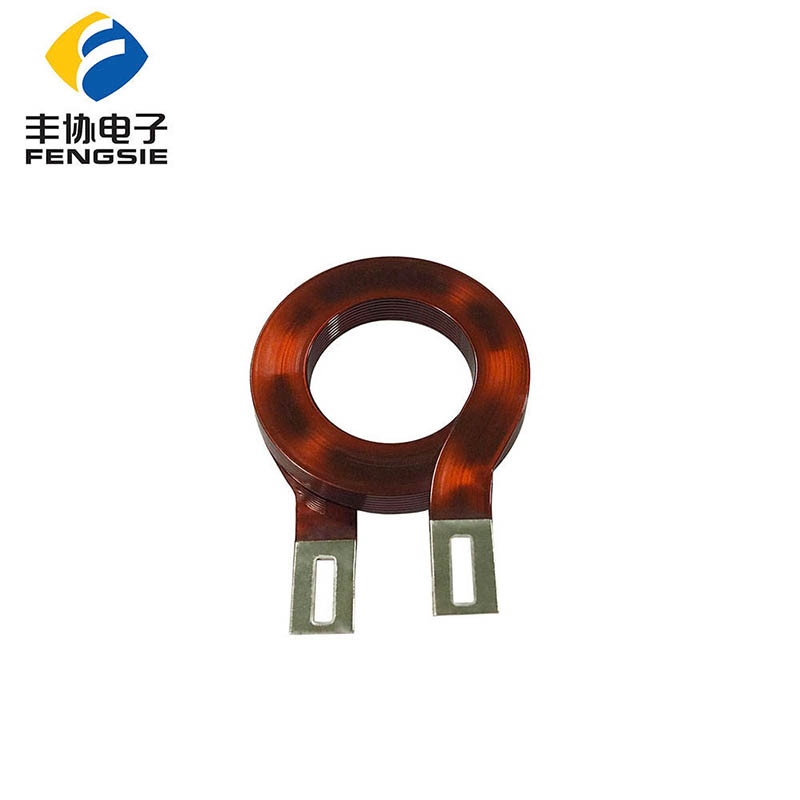
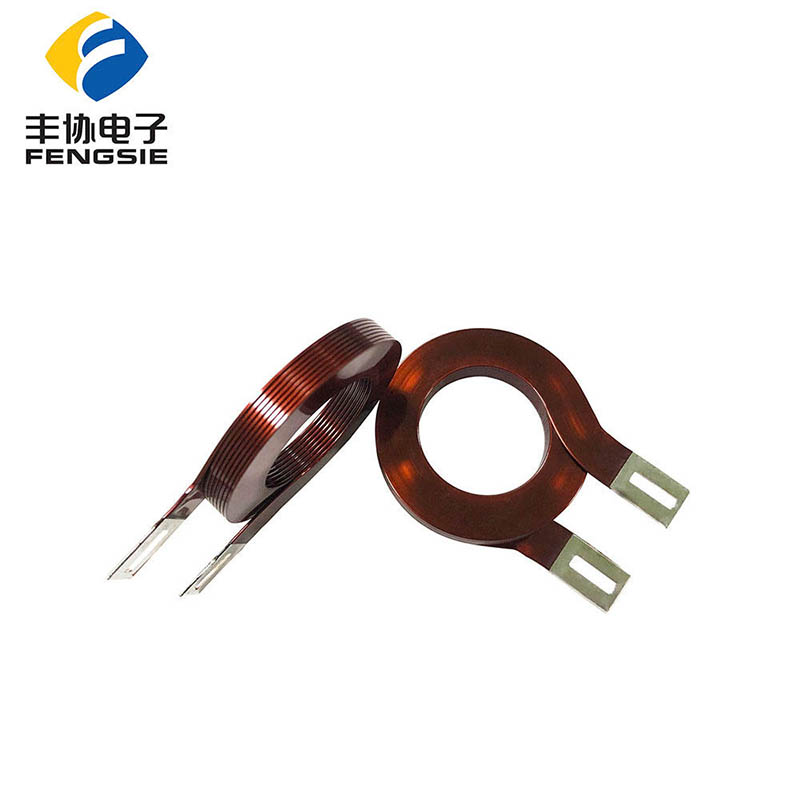
As electric vehicles evolve towards 800V high-voltage platforms and 350kW ultra-fast charging, on-board power systems pose unprecedented challenges to the efficiency, power density, and thermal management of magnetic components. Traditional ferrite or magnetic powder core inductors are prone to increased core losses, uncontrolled temperature rise, and even saturation failure under high-frequency, high-current conditions. Automotive vehicle air inductor coils, with their coreless structure, ultra-thin form, and advanced winding technology, have become key components in DC-DC converters, OBCs, and high-voltage power distribution modules. Combining flat wire, Litz wire, and edge-wound technologies, these coils effectively suppress temperature rise while ensuring high-power energy transfer, meeting automotive-grade reliability standards such as AEC-Q200.1. Coreless Design: Eliminating Magnetic Losses and Improving High-Frequency EfficiencyThe core advantage of air inductor coils lies in completely eliminating magnetic materials, relying solely on precisely wound conductors to form the inductance. In electric vehicle charging systems operating at frequencies as high as 100–500 kHz, the eddy current and hysteresis losses of traditional magnetic cores increase with the square of the frequency, while air coils completely avoid this problem. Despite their lower inductance, optimized turns and geometry can still meet filtering and energy storage requirements. More importantly, air coils do not experience magnetic saturation during high-current transients, ensuring a constant inductance value and maintaining power loop stability—crucial for protecting SiC/GaN power devices.2. Flat Wire and Litz Wire Technology: Reducing AC Resistance and Suppressing Skin EffectTo handle peak currents of hundreds of amperes, air coils commonly employ high-current flat wire or multi-strand stranded Litz wire. Flat wire increases the conductor surface area, reducing DC resistance; while Litz wire, woven from tens to hundreds of insulated fine copper wires, effectively disperses the skin and proximity effects at high frequencies, ensuring a uniform current distribution across the entire cross-section. Experiments show that at 200kHz, the AC/DC resistance ratio of the air coil wound with Litz wire can be controlled below 1.2, far superior to that of solid round wire. This not only improves energy transfer efficiency but also reduces Joule heat generation at the source, laying the foundation for temperature rise control.3. Ultra-thin Edge-Wound Structure: Optimized Space Layout and Heat Dissipation PathThe ultra-thin design, with a product height of only 6.5mm, benefits from the edge-winding process—arranging flat wires tightly on the frame in a "vertical" manner to maximize copper fill rate while reducing the overall profile. This structure not only fits the compact space of electric vehicle electronic compartments but also shortens the heat conduction path: heat can be quickly dissipated from the inside of the coil through PCB copper foil or metal supports. Some designs also embed the coil directly into the aluminum substrate or liquid cooling plate for active heat dissipation. Furthermore, the vibration-resistant structure, through epoxy potting or mechanical clamping, ensures that the windings do not loosen or fretting during vehicle vibrations, avoiding localized overheating caused by increased contact resistance.4. Automotive-Grade Reliability: Stable Operation Throughout the Entire LifecycleAll materials and processes comply with AEC-Q200 passive component certification requirements. The insulating varnish uses high-temperature resistant polyimide or polyesterimide with a withstand voltage >3kV; soldered terminals undergo 100% X-ray inspection to eliminate cold solder joints. In temperature cycling from -40℃ to +150℃, random vibration, and salt spray testing, the inductance drift is <±3%, ensuring long-term reliability under harsh conditions. Whether used in ignition coils, solenoid valves, or high-voltage DC-DC converters, this type of air inductor coil maintains consistent performance.