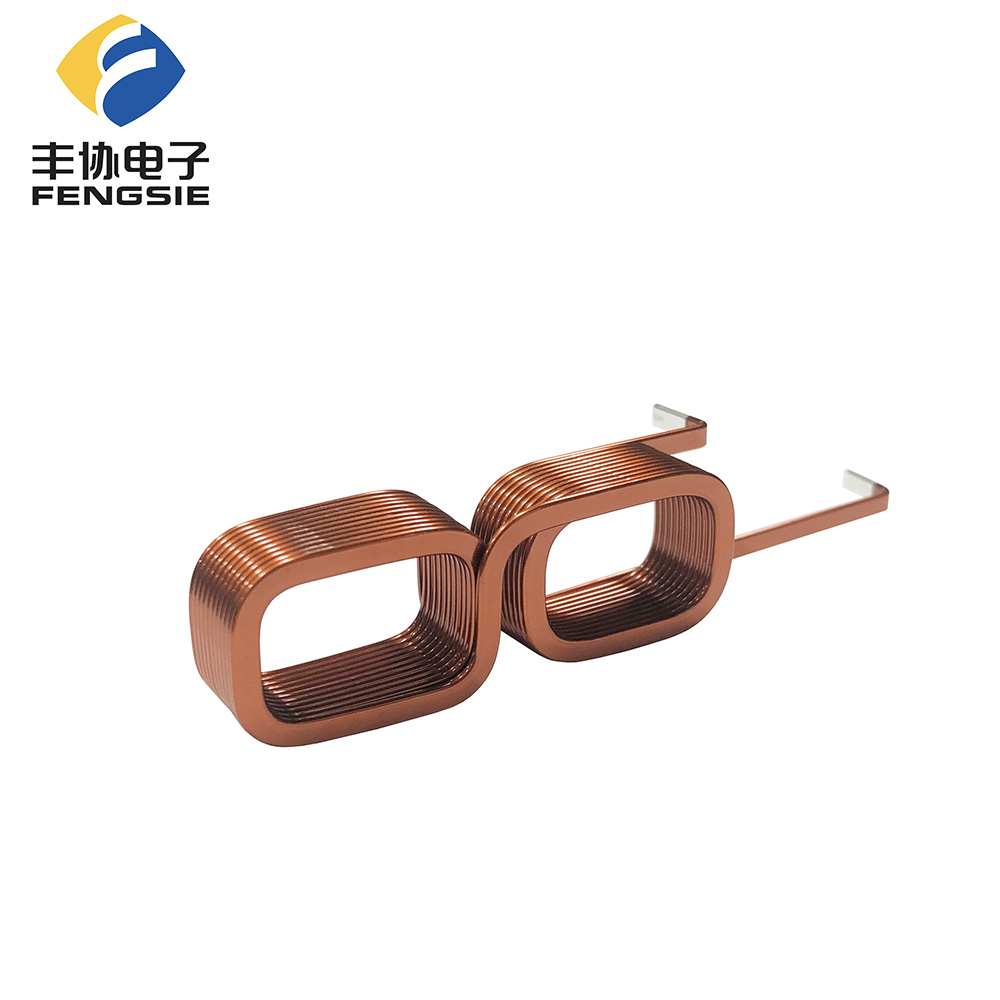
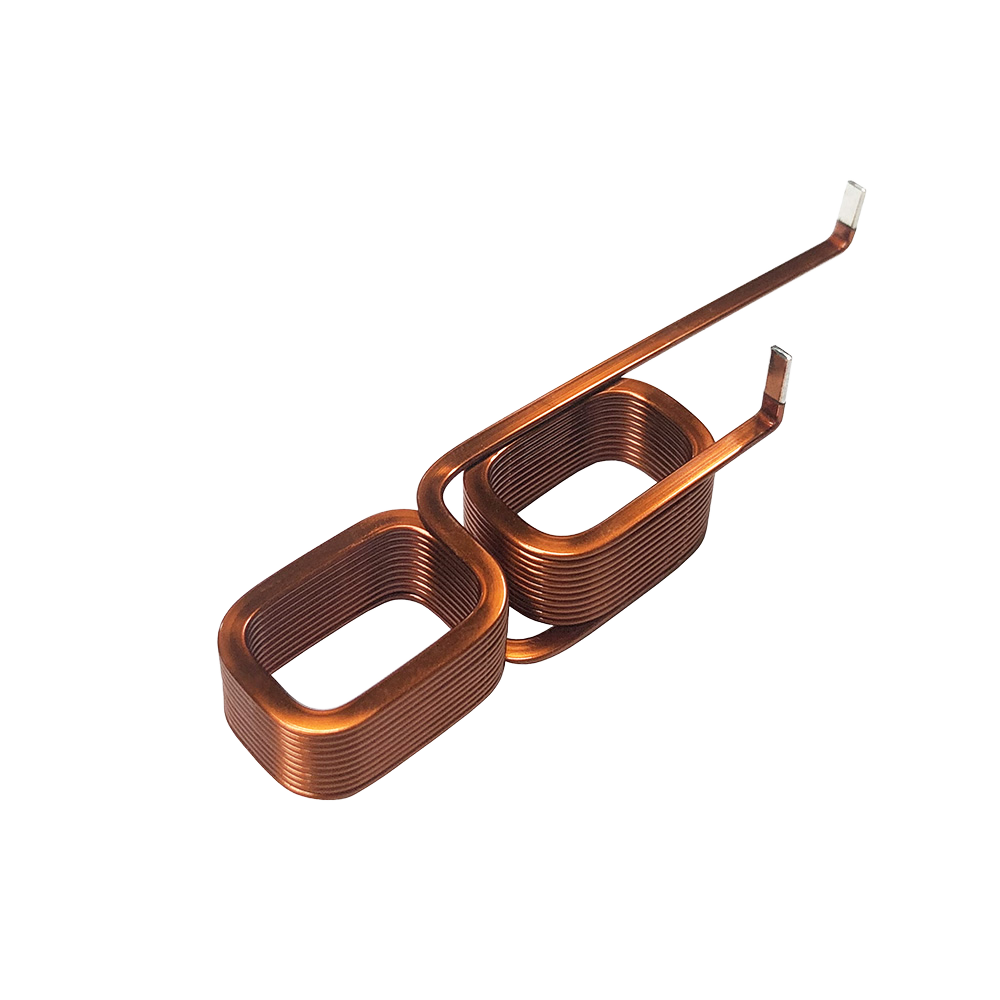
How can dual-wound high current inductors effectively balance current across phases and reduce current imbalance in multiphase power supply applications?
Publish Time: 2026-01-06
In high-power power electronic systems, such as data center power supplies, electric vehicle drives, industrial frequency converters, and advanced energy storage systems, multiphase power supply topologies are widely used due to their high efficiency, low ripple, and high power density. However, due to factors such as component parameter dispersion, wiring asymmetry, or dynamic load changes, uneven current distribution often occurs between phases, not only reducing system efficiency but also potentially causing localized overheating or even device failure. Against this backdrop, dual-wound high current inductors, with their unique electromagnetic coupling structure and material advantages, demonstrate significant value in achieving automatic current balancing between phases. Especially when using flat copper wire winding, edge-winding technology, and multi-layer stacked structures, they can balance high current carrying capacity, low AC loss, and excellent magnetic coupling performance, becoming a key "current equalizer" in multiphase power supply systems.
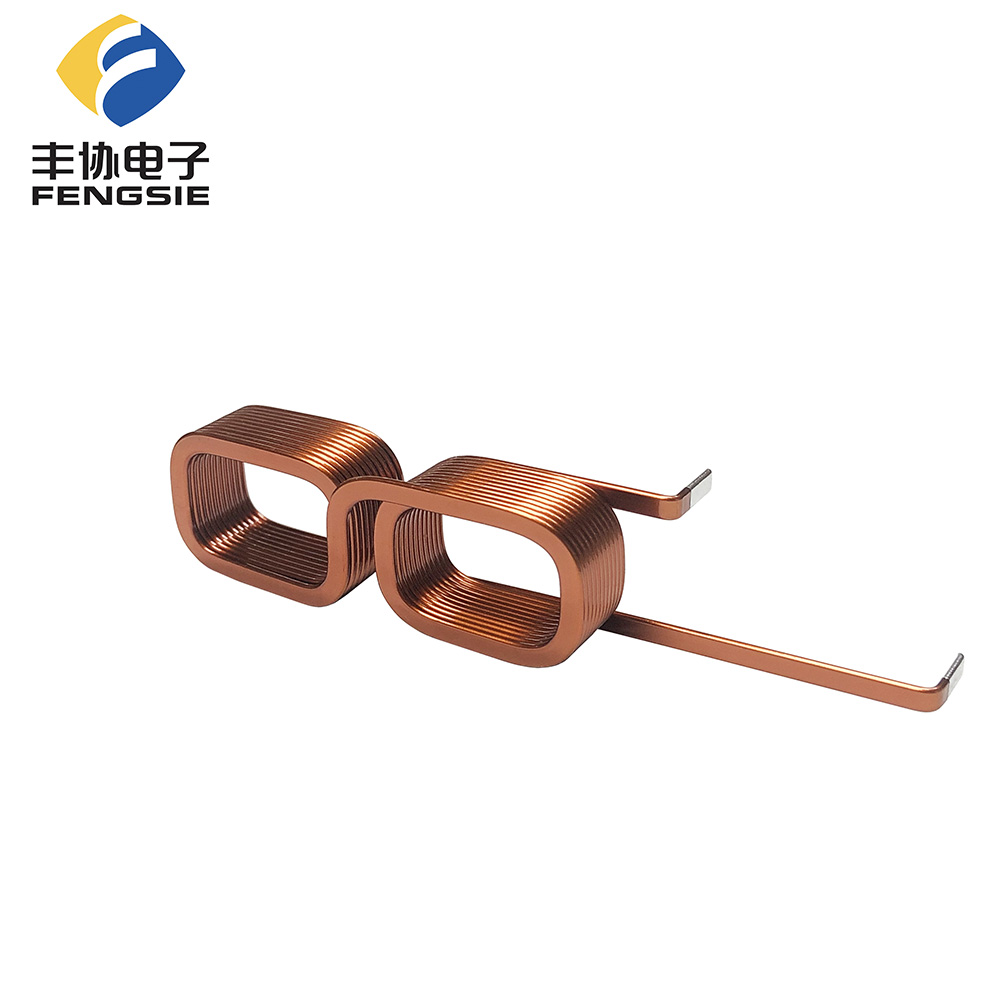

1. The Natural Coupling Advantages of Dual-Wound StructureIn traditional multiphase power supplies, each phase is typically equipped with an independent inductor, with magnetic circuits isolated from each other. If the inductance value of a phase deviates due to manufacturing tolerances or temperature drift, it will lead to a steady-state current deviation. Dual-wound high-current inductors integrate the two-phase windings onto the same magnetic core, forming a strong magnetic coupling structure. According to Faraday's law of electromagnetic induction, when there is a difference in the current between the two phases, the magnetic flux imbalance will induce a compensation voltage in the coupled windings, automatically suppressing the phase with the larger current and exciting the phase with the smaller current, thus achieving passive, real-time, and adaptive current balancing. This mechanism requires no additional control algorithms or sensors, has high reliability, and fast response speed, making it particularly suitable for multi-phase Buck or interleaved PFC circuits in high-frequency switching.2. Flat Copper Wire and Edge-Wound Technology Enhance Performance BoundariesTo carry large currents of hundreds of amperes and suppress skin effect and proximity effect losses, modern high-performance inductors generally use copper flat wire instead of traditional round wire. Flat wire has a larger surface area and a more regular cross-sectional shape, which can significantly reduce high-frequency AC resistance (ACR) for the same cross-sectional area. Combining edgewise winding technology—that is, winding the flat wire with the wide face perpendicular to the core window direction—can further optimize the winding fill factor, reduce interlayer gaps, and improve heat dissipation efficiency. In a dual-winding structure, two sets of flat wire windings can be staggered or symmetrically arranged on a toroidal or E-type core to ensure magnetic circuit symmetry, maximize mutual inductance (M), and thus enhance current balancing capabilities.3. Synergistic Role in High-Power Energy Storage SystemsIn magnetic energy storage applications such as Flat Wire Coil Energy Storage and High Power Choke Coil Storage, inductors are not only filtering elements but also energy temporary storage units. Taking superconducting magnetic energy storage (SMES) as an example, its core is the toroidal superconducting coil. Although it operates in a zero-resistance state, a large number of high-current inductors are still required in the power regulation unit at the grid interface for energy buffering and current shaping. At this point, a magnetic energy storage inductor with a dual-winding structure can simultaneously serve the arms of a multi-phase PCS bridge. Through magnetic coupling, it naturally balances the charging and discharging currents of each phase, preventing the superconducting coil from quenching due to localized overcurrent.Furthermore, in a multilayer coil energy system, the low inductive reactance and high thermal conductivity path formed by multi-layer flat wire stacking, combined with the dual-winding topology, can maintain current deviations of less than 5% in each phase within millisecond-level dynamic response. This is crucial for battery-supercapacitor hybrid energy storage systems or megawatt-scale photovoltaic inverters that require strict current sharing.4. Key Design Elements for Reducing Current ImbalanceTo fully utilize the balancing efficiency of dual-winding inductors, meticulous design is required in the following aspects:High Coupling Coefficient Core Selection: Employ high-permeability, low-loss ferrite or nanocrystalline cores and optimize the window size so that the two windings share almost identical main flux paths.Symmetrical Winding Layout: Ensure that the number of turns, layers, and winding direction of the two windings are completely consistent to avoid introducing inherent imbalances.Integrated Thermal Management: Utilizing the excellent planar contact characteristics of flat wires, the inductor is directly mounted on the heat sink, preventing changes in copper resistance due to temperature rise differences and thus avoiding deterioration of current sharing performance.Parasitic Parameter Control: Through precise modeling and simulation, distributed capacitance and leakage inductance between windings are minimized, avoiding resonance or phase shift at high frequencies.Dual-wound high current inductors provide an efficient, reliable, and passive current balancing solution for multiphase power systems through a magnetic coupling mechanism. Combining flat copper wires, edge-wound technology, and a multi-layer structure, it not only possesses excellent power handling capabilities but also exhibits unique advantages in high-power magnetic energy storage scenarios. In an era of energy conversion pursuing higher efficiency, higher power density, and higher reliability, this type of inductor will become a key cornerstone for balancing current, stabilizing systems, and unlocking energy storage potential.