How does the EV power inductor coil build a seamless and safe energy transmission barrier?
Publish Time: 2026-03-02
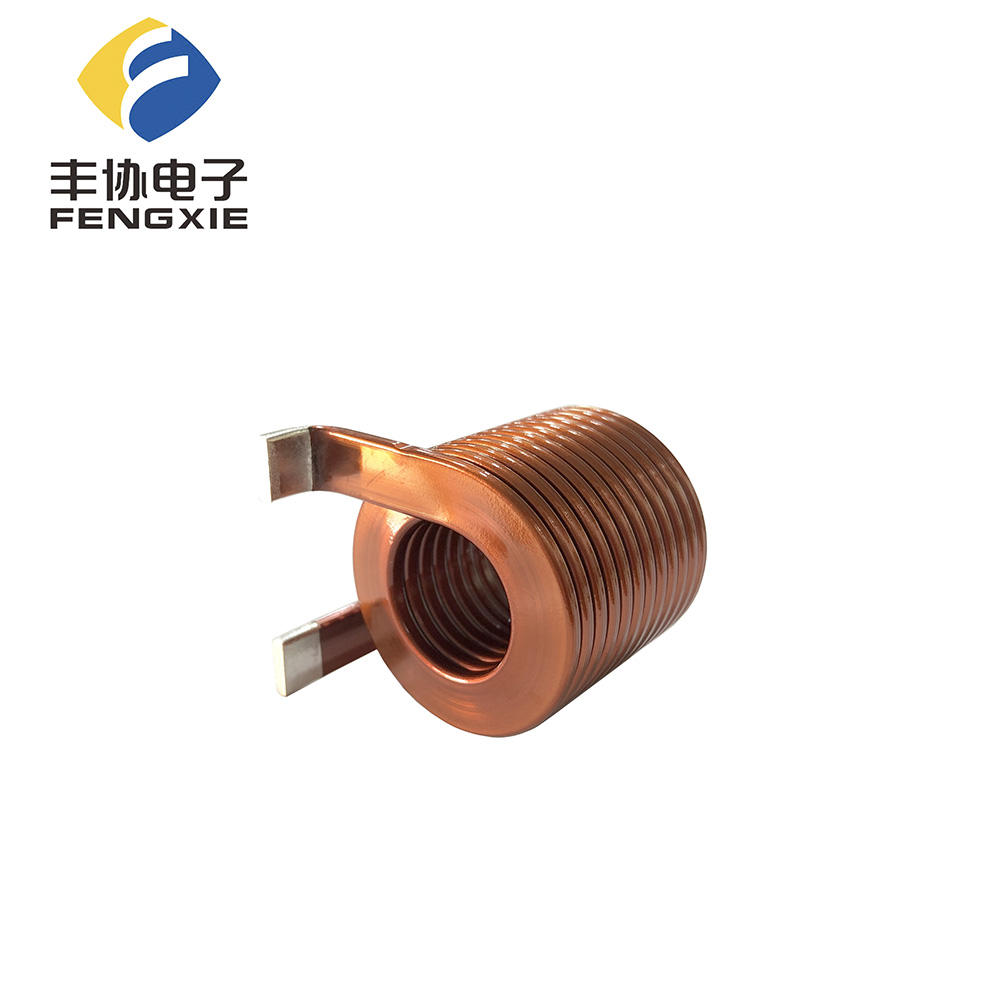
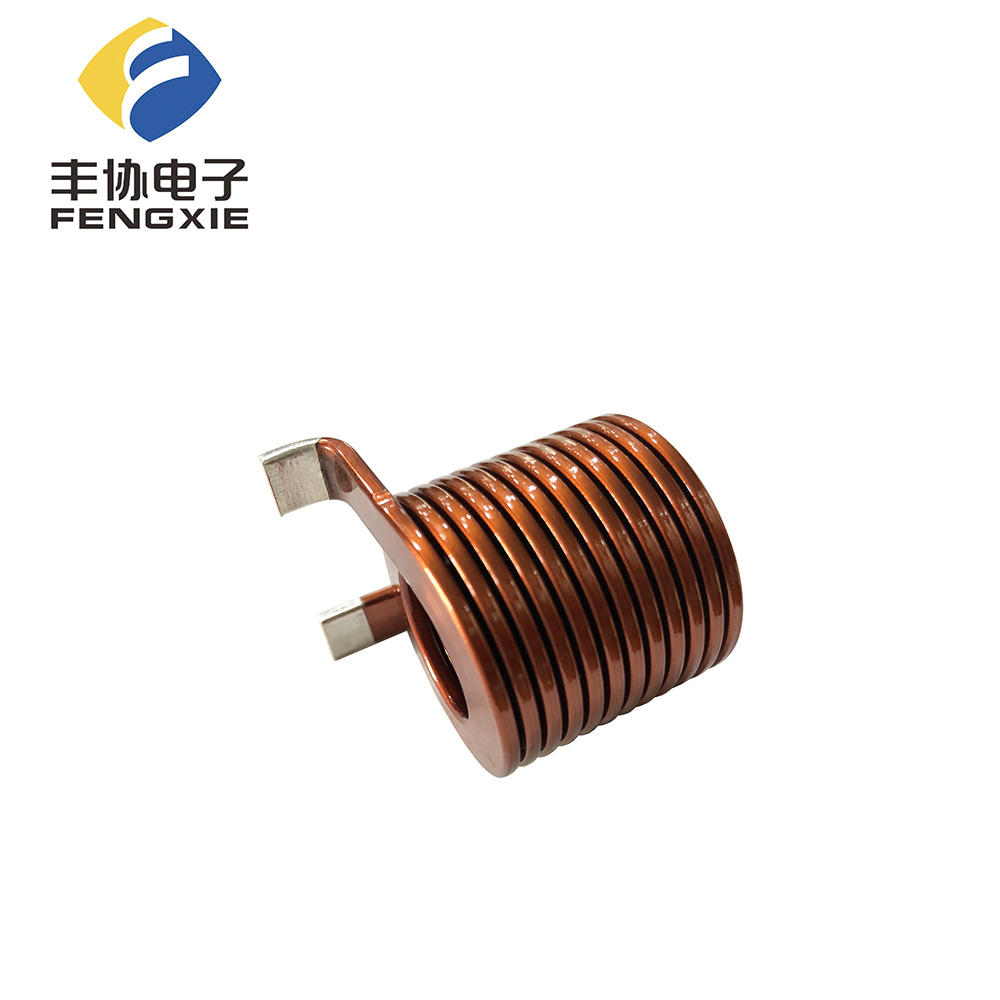
In the grand blueprint of wireless charging technology for electric vehicles, the EV power inductor coil plays a crucial role as an "energy catcher." It needs to build an invisible energy bridge between the vehicle and the ground, achieving both efficient power transmission and ensuring absolute "seamlessness" and safety for the user. This barrier is not built on a single magic trick, but rather stems from the deep integration of electromagnetic principles and advanced winding techniques. From flat wire inductance to toroidal topology, every coil form contributes a key force to this silent energy revolution.1. The Flattening Revolution: Ultimate Efficiency at High CurrentTraditional round enameled wire often faces bottlenecks such as severe skin effect and low fill factor when dealing with high-power charging of electric vehicles. To address this, the High Current Flat Wire Coil was developed. This coil, using a rectangular cross-section conductor, greatly improves the slot fill factor, allowing more copper to be accommodated in a limited space, thereby significantly reducing DC resistance and AC losses. Designed with flat wire inductors for automotive applications, the coil can withstand hundreds of amperes of transient current without overheating, ensuring efficient energy transfer.Furthermore, the edgewise winding coil technology involves side-winding flat wires, much like stacked building blocks. This not only optimizes the magnetic field distribution but also significantly reduces the coil's axial height. This compact structure allows the transmitter and receiver coils to fit more tightly, shortening the magnetic circuit air gap and maintaining an extremely high coupling coefficient even with centimeter-level misalignment. This physical compactness and efficiency ensure that users don't feel any energy waste or device bulkiness when charging while the device is parked, achieving a truly "seamless" experience.2. High Frequency and Low Loss: The Electromagnetic Dance of a Fine StructureWireless charging operates in a high-frequency alternating magnetic field, where eddy current losses within the conductor are the primary obstacle. Litz wire for automotive electronics, composed of multiple strands of insulated fine wire, effectively breaks eddy current paths, significantly reducing high-frequency AC resistance. While flat wires perform excellently under high current, the flexibility of Litz wires remains indispensable in certain high-frequency harmonic suppression scenarios.Meanwhile, the optimized design of high-frequency solenoid coils, combined with advanced magnetic shielding materials, strictly confines the magnetic field within the transmission channel. This design prevents high-frequency electromagnetic waves from radiating outwards, protecting sensitive electronic equipment within the vehicle and avoiding potential harm to the human body. The cross-industry application of ignition coil flat wire technology provides inspiration for the stable transmission of high-voltage pulses, ensuring smooth and stable energy flow during dynamic charging or start-stop cycles, eliminating safety hazards caused by current spikes.3. Topological Innovation: From Air-Core to Toroidal Safety Closed-LoopThe magnetic core structure of the coil directly determines the amount of leakage flux, and leakage flux control is the last line of defense for safety. While air-core coils for automobiles are simple in structure and lightweight, they exhibit significant leakage flux during large-pitch transmission. Therefore, modern high-end systems increasingly employ composite magnetic core structures. The concept of toroidal inductor for automotive applications has been incorporated into the design of large-size transmitting coils. The toroidal closed magnetic circuit inherently possesses extremely low leakage flux, firmly locking magnetic lines of force within the loop to form a closed energy circulation system with virtually no electromagnetic interference to the outside world.