How does the core material of an EV charging pile inductor affect its efficiency and thermal performance under high-frequency fast charging conditions?
Publish Time: 2026-01-20
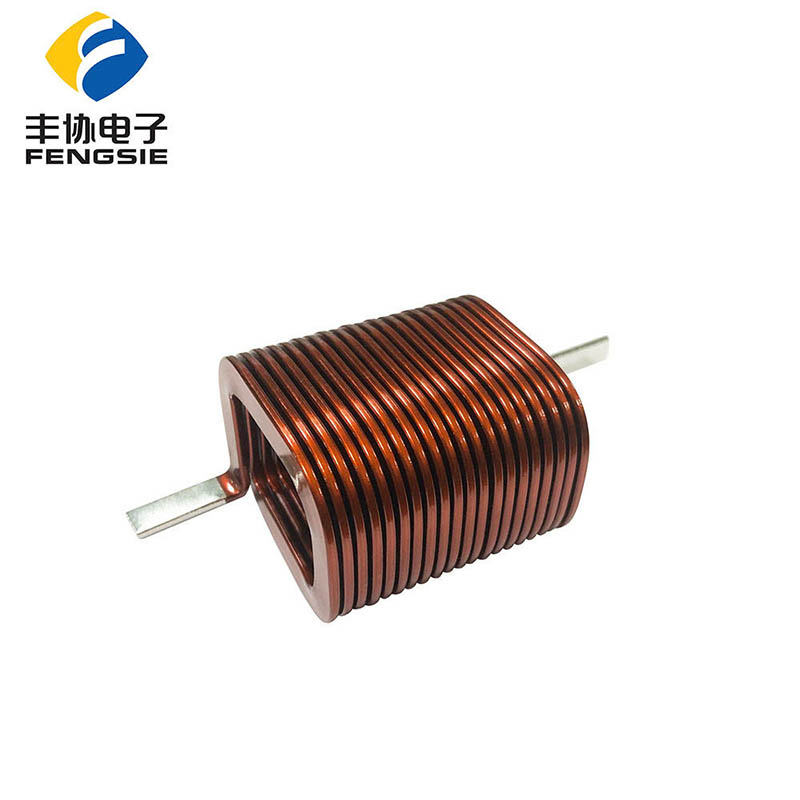
As electric vehicles (EVs) become mainstream, the demand for high-efficiency, reliable, and ultra-fast charging infrastructure has surged. At the heart of this infrastructure lies the EV charging pile inductor—a key passive component that directly influences power conversion efficiency, thermal stability, and system longevity. Among its many design parameters, the choice of core material stands out as a decisive factor in determining how well the inductor performs under the extreme electrical and thermal stresses of high-frequency fast charging. This article explores how core material selection impacts efficiency and thermal behavior, with reference to the inductor’s high-power performance, extended temperature endurance, optimized thermal management, and precision multi-layer winding architecture.High-Power Performance Demands Advanced Magnetic MaterialsModern EV fast charging piles routinely operate at power levels exceeding 150 kW, with next-generation systems targeting 350 kW or more. Under such conditions, inductors must handle extremely high RMS and peak currents without saturating or overheating. The core material directly governs the inductor’s ability to store magnetic energy and resist saturation. Traditional ferrite cores, while cost-effective and low-loss at moderate frequencies, often suffer from limited saturation flux density (typically below 0.5 T), making them unsuitable for high-current applications. In contrast, advanced core materials—such as gapped powdered iron, sendust (Fe-Si-Al), and nanocrystalline alloys—offer higher saturation levels (up to 1.2–1.6 T), enabling compact designs that maintain linearity even under extreme load. These materials allow the inductor to sustain high-power performance without magnetic collapse, ensuring stable current delivery during rapid charging cycles.Extended Temperature Endurance: Material Stability Across Operational ExtremesEV charging infrastructure is deployed globally, from arctic climates to desert environments. Inductors must therefore function reliably across a wide temperature range—typically from –45°C to +125°C. Core material plays a pivotal role here. Ferrites, for instance, exhibit significant permeability drift and increased core losses at elevated temperatures, while some metallic alloys may oxidize or degrade over time. High-performance core materials like high-temperature-rated sendust or specially coated nanocrystalline ribbons maintain consistent magnetic properties across this broad thermal spectrum. Their Curie temperatures often exceed 300°C, far beyond operational limits, ensuring no abrupt loss of inductance. Moreover, these materials demonstrate minimal hysteresis loop distortion under thermal cycling, which is essential for maintaining consistent efficiency in automotive power systems and energy storage charging units that experience frequent on/off transitions.
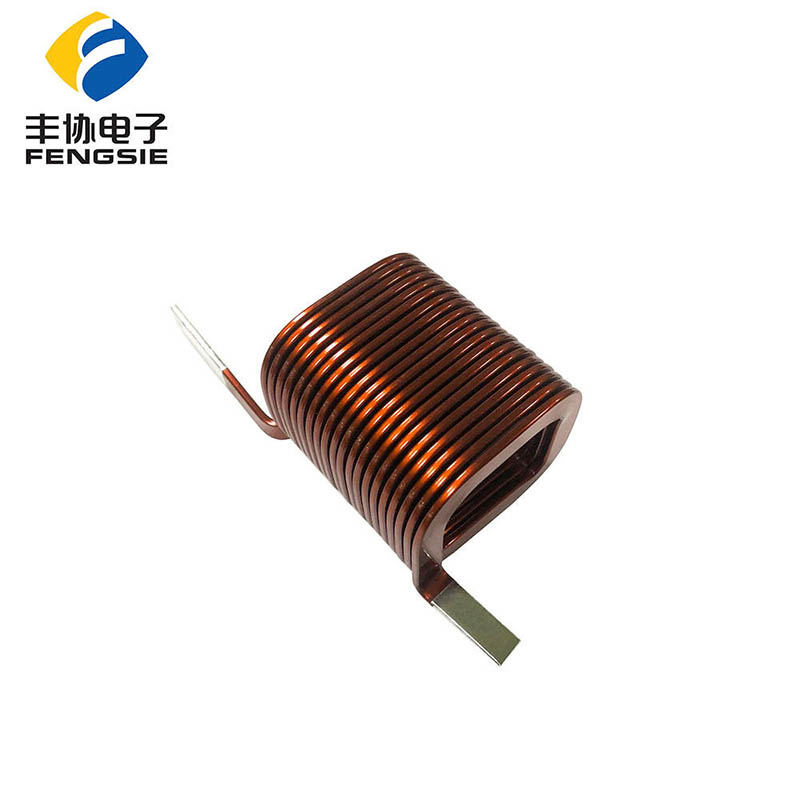
Optimized Thermal Management Through Core-Loss CharacteristicsEven with robust structural heat dissipation features—such as aluminum housings, thermal vias, or potting compounds—the inductor’s internal heat generation remains dominated by core losses, especially under high-frequency switching (typically 20–100 kHz in modern chargers). Core loss comprises hysteresis loss and eddy current loss, both highly dependent on material composition and microstructure. Ferrites excel at minimizing eddy currents due to their high electrical resistivity but suffer from rising hysteresis losses at higher flux densities. Conversely, powdered iron cores offer better saturation handling but generate more eddy current loss unless insulated at the particle level. The most effective solution for EV charging pile inductors combines low-loss nanocrystalline or amorphous metal cores with optimized lamination or granular insulation. These materials achieve a balance: low total core loss even at 50–100 kHz and high B-field operation. When paired with an advanced thermal design—such as direct core-to-heatsink contact or thermally conductive encapsulation—the result is an inductor that maintains safe operating temperatures throughout prolonged 350 kW charging sessions.Synergy with Precision Multi-Layer Winding: Minimizing Total System LossesThe inductor’s 20-turn precision multi-layer winding is engineered to complement the core material’s magnetic profile. A mismatch between core permeability and winding inductance can lead to excessive copper loss or suboptimal ripple current handling. High-permeability nanocrystalline cores, for example, allow fewer turns to achieve the same inductance, reducing AC resistance and proximity effects. However, they require tighter control over winding geometry to avoid localized hotspots. In contrast, lower-permeability sendust cores may need more turns but offer greater tolerance to winding variations. The chosen core material must therefore align with the winding strategy to minimize total losses (core + copper). Additionally, the uniformity of the magnetic field within the core—dictated by its shape (e.g., toroidal vs. E-core) and material homogeneity—directly affects eddy current distribution in the windings. A well-matched core-winding system ensures superior magnetic performance with minimal parasitic losses, critical for DC-DC converters in EVs where every watt of efficiency translates into extended driving range.Application-Specific Implications Across Key DomainsThe impact of core material selection reverberates across all target applications. In public EV charging stations, reliability and uptime are paramount; a thermally stable, low-loss inductor reduces maintenance and downtime. In ultra-fast charging piles, where thermal runaway is a constant risk, advanced core materials prevent efficiency collapse during back-to-back charging cycles. Within automotive power systems, space and weight constraints favor high-saturation, compact cores that deliver consistent performance under vibration and thermal shock. For onboard DC-DC converters, low audible noise and EMI—both influenced by core magnetostriction and loss characteristics—are essential for passenger comfort and electronic compatibility. Finally, in grid-connected energy storage charging systems, bidirectional power flow demands symmetric core behavior under both charge and discharge modes, a requirement met only by the most linear and stable magnetic materials.
The core material of an EV charging pile inductor is far more than a passive substrate—it is an active enabler of high-efficiency, high-reliability power delivery in the electrified transportation era. By selecting materials that offer high saturation flux, low core loss at high frequencies, and exceptional thermal stability, engineers can fully leverage the inductor’s designed features: extreme current handling, wide temperature resilience, efficient heat dissipation, and precision winding. As charging speeds continue to climb and system integration deepens, the strategic choice of magnetic core will remain central to unlocking the next generation of EV charging performance.